
Categories
Homeownership, Kansas City Real Estate, Home MaintenancePublished October 4, 2026
Kansas City Storm Season Home Prep: 9 Smart Ways to Protect Your Home, Yard, and Resale Value

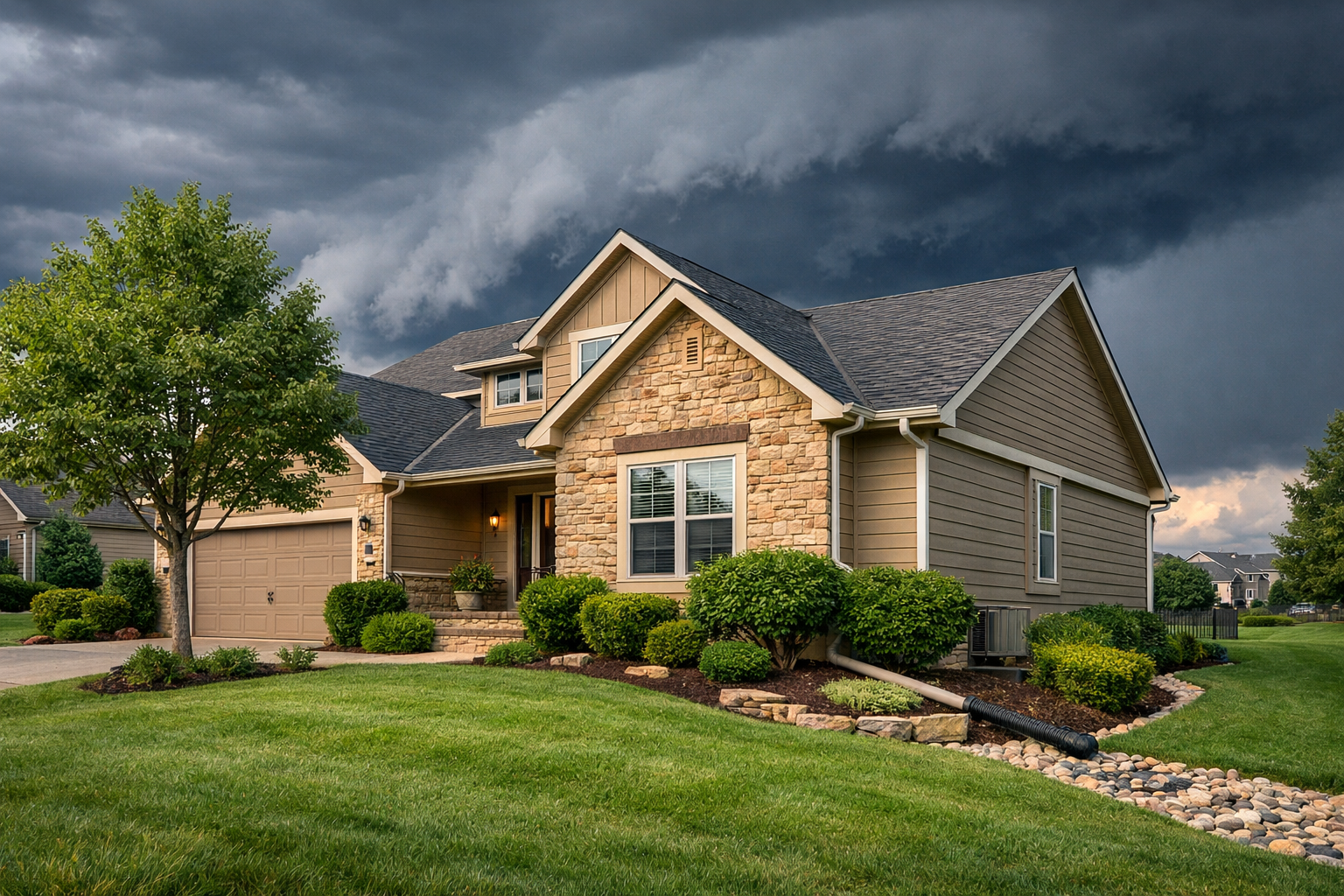
Storm season in the Kansas City metro can bring heavy rain, hail, high winds, flash flooding, and sudden temperature swings that test every part of a home. From older neighborhoods in Shawnee to newer subdivisions in Overland Park and Lee’s Summit, local homeowners know that one strong storm can expose weak gutters, overgrown trees, poor drainage, or roofing issues that were easy to ignore during calmer months.
The good news is that smart preparation does more than reduce the chance of damage. It can also protect curb appeal, prevent deferred maintenance, support insurance claims if a storm does hit, and help preserve resale value when it is time to sell. Here are nine practical ways Kansas City homeowners can get ahead of storm season.
1. Make sure water drains away from the foundation
In the Kansas City area, repeated downpours can quickly reveal grading and drainage problems. If water pools near the base of the home, it can increase the risk of basement moisture, foundation movement, and landscape erosion. Even small drainage issues can become expensive over time.
Walk the perimeter of the property after a steady rain and look for standing water, muddy low spots, or downspouts that dump water too close to the house. If needed, extend downspouts, regrade problem areas, or add drainage solutions that move water away from the foundation. This is especially important for homes with basements, walkout lower levels, or yards that slope back toward the structure.
From a resale perspective, visible drainage problems can raise red flags for buyers. A yard that handles water well signals ongoing care and can help a home show better during wet-weather showings.
2. Clean and inspect gutters before peak storm activity
Gutters do a simple job, but when they clog, the consequences can spread quickly. Overflowing gutters can damage fascia boards, siding, landscaping, and foundations. In severe storms, backed-up water may also find its way into soffits or roof edges.
Before storm season ramps up, clear out leaves, seed pods, and debris. Then check for loose fasteners, sagging sections, leaking seams, and downspouts that are disconnected or crushed. Kansas City’s spring growth and storm cycles can fill gutters faster than many homeowners expect, especially on homes with mature trees.
If you have been putting off gutter maintenance, this is one of the highest-value tasks to tackle. Buyers notice water stains, erosion below rooflines, and neglected exterior systems. Clean, functioning gutters suggest the home has been maintained consistently.
3. Trim trees and remove vulnerable limbs
Mature trees are a major asset in many Kansas City neighborhoods, but they can also become a liability during wind and hail events. Limbs hanging over the roof, driveway, fence, or power lines deserve attention before severe weather arrives.
Look for dead branches, split limbs, signs of disease, or trees leaning more than usual. If large limbs are close to the house or utility lines, bring in a qualified tree professional. Preventive trimming is usually far less expensive than emergency removal after a storm.
Well-maintained trees improve curb appeal and shade, but neglected trees can make buyers worry about roof damage, drainage issues, and future maintenance costs. A healthy canopy is an advantage. A risky one can become a negotiation point.
4. Check the roof for small issues before they become major repairs
Hail and wind are part of life in the Kansas City metro, and roofing problems often start small. Missing shingles, lifted flashing, exposed nail heads, or worn sealant around vents can allow water intrusion during the next storm.
Homeowners do not need to climb onto the roof to spot every issue. A visual check from the ground can reveal obvious trouble, including shingle debris near downspouts, uneven rooflines, damaged ridge caps, or flashing that appears loose. If the roof is older or has been through recent hail, scheduling a professional inspection can be a smart move.
Roof condition matters in nearly every real estate transaction. Buyers, inspectors, and insurers all pay attention to it. Staying ahead of repairs can help avoid last-minute surprises when listing a home and may strengthen buyer confidence.
5. Seal exterior gaps and inspect windows and doors
Wind-driven rain can find its way through surprisingly small openings. Check caulking around windows and doors, inspect weatherstripping, and look for cracks where utility lines or vents pass through exterior walls. Garage doors should also be checked for worn seals and proper closure.
These smaller maintenance items help reduce moisture intrusion, improve energy efficiency, and keep interiors more comfortable during stormy weather. In a region where humid summers and sudden storms often overlap, that extra protection matters.
For resale, buyers appreciate homes that feel tight, dry, and well cared for. Drafts, water staining, or visible exterior gaps can create the impression that maintenance has been deferred elsewhere too.
6. Protect the yard, fencing, and outdoor features
Storm prep is not only about the house itself. Outdoor furniture, grills, planters, play equipment, and lightweight décor can become hazards in strong winds. Fences should be checked for loose posts, leaning sections, and weakened gates before storms put extra stress on them.
It is also worth inspecting retaining walls, edging, and landscape beds for erosion risk. In parts of Overland Park, Lee’s Summit, Shawnee, and surrounding communities, sloped lots and heavy runoff can wash out mulch, expose roots, and undermine hardscaping if drainage is not managed well.
A tidy, secure exterior helps protect property and keeps the home looking market-ready. Outdoor neglect is easy for buyers to spot and can affect how they perceive the condition of the entire property.
7. Test the sump pump and review basement moisture risks
For homes with basements or lower-level storage, sump pump maintenance is essential before heavy rain arrives. Test the pump, confirm the discharge line is clear, and make sure water is being directed away from the home. If the system has a battery backup, verify that it is functioning properly.
Also inspect the basement for musty odors, staining, efflorescence, or signs of previous seepage. These clues may indicate that drainage improvements or waterproofing measures are needed.
Basement moisture concerns can affect both livability and value. Buyers tend to be cautious about any sign of water intrusion, especially in storm-prone markets. A dry lower level is a meaningful selling point.
8. Document the home’s condition for insurance purposes
One of the smartest storm-season habits has nothing to do with tools. Take current photos of the roofline, siding, windows, fencing, landscaping, and major exterior features. Save receipts for recent maintenance or upgrades, including roofing work, gutter replacement, tree trimming, or drainage improvements.
If storm damage occurs, organized documentation can make the insurance process smoother and help establish the pre-storm condition of the property. It is also wise to review deductibles, coverage details, and any exclusions related to wind, hail, or water damage.
Good records are useful beyond insurance claims. When it is time to sell, maintenance documentation can help demonstrate pride of ownership and support the home’s overall presentation.
9. Think like a future buyer while you prepare
Storm prep is practical, but it is also strategic. The same items that help a home perform better during severe weather often influence buyer perception later: drainage, roof condition, tree maintenance, exterior care, and signs of proactive ownership.
As you work through seasonal maintenance, ask whether each improvement reduces risk, improves appearance, or prevents a future objection during a sale. In many cases, the answer is yes. A home that has been protected from avoidable storm-related wear is often easier to market and easier for buyers to trust.
That matters in every kind of market. Whether you plan to stay for years or eventually sell, protecting your home through Kansas City storm season is also a way to protect long-term value.
Final takeaway
Kansas City homeowners cannot control the weather, but they can control how prepared their property is before the next round of storms arrives. By focusing on drainage, gutters, trees, roofing, exterior sealing, basement protection, and documentation, homeowners can reduce the chance of costly damage while preserving comfort, appearance, and resale potential.
Seasonal maintenance may not be glamorous, but it is one of the most practical investments a homeowner can make in both the property and its future marketability.
or another way